How to get clients for a cleaning business? [2026]
 Maciej Cupiał
You started your cleaning business because you're good at what you do. But right now, your schedule has gaps you can't afford, and every empty slot feels like money walking out the door. Many cleaning business owners hit this exact wall. The cleaning services are solid. What's missing is a steady stream of people who actually know you exist.
Here's what makes the cleaning industry different from most service businesses: it's deeply local, completely trust-driven, and speed matters more than you think. When someone decides they need help with residential or commercial cleaning, they don't spend weeks researching. They search, scan reviews, and pick whoever makes it easiest to book. That's your window, and it's small.
So forget vague advice about "building your brand." What follows are 11 methods that bring real cleaning clients to your door, your phone, or straight into your booking calendar. Whether you offer house cleaning or run a commercial cleaning business handling janitorial services, every method here has been road-tested by actual cleaning companies. These are the tactics that help you find clients who have immediate cleaning needs, and turn them into long-term customers.
1. Build a simple website that converts (not just looks good)
Your website doesn't need to win design awards. It needs to answer three questions within five seconds: What do you clean? Where do you clean? How do I book? That's it. Most cleaning businesses overcomplicate this with stock photography and generic taglines. Your potential clients don't care about sliders. They care about whether you serve their zip code and whether you seem trustworthy.
Start with a homepage that states your core offer: residential cleaning, commercial cleaning, deep cleaning. Add dedicated service pages for each offering so potential customers can find exactly what they need. List your service area by name (neighborhoods, cities, suburbs). Include your phone number prominently. And give people a pricing ballpark as "Starting from" pricing removes a major friction point.
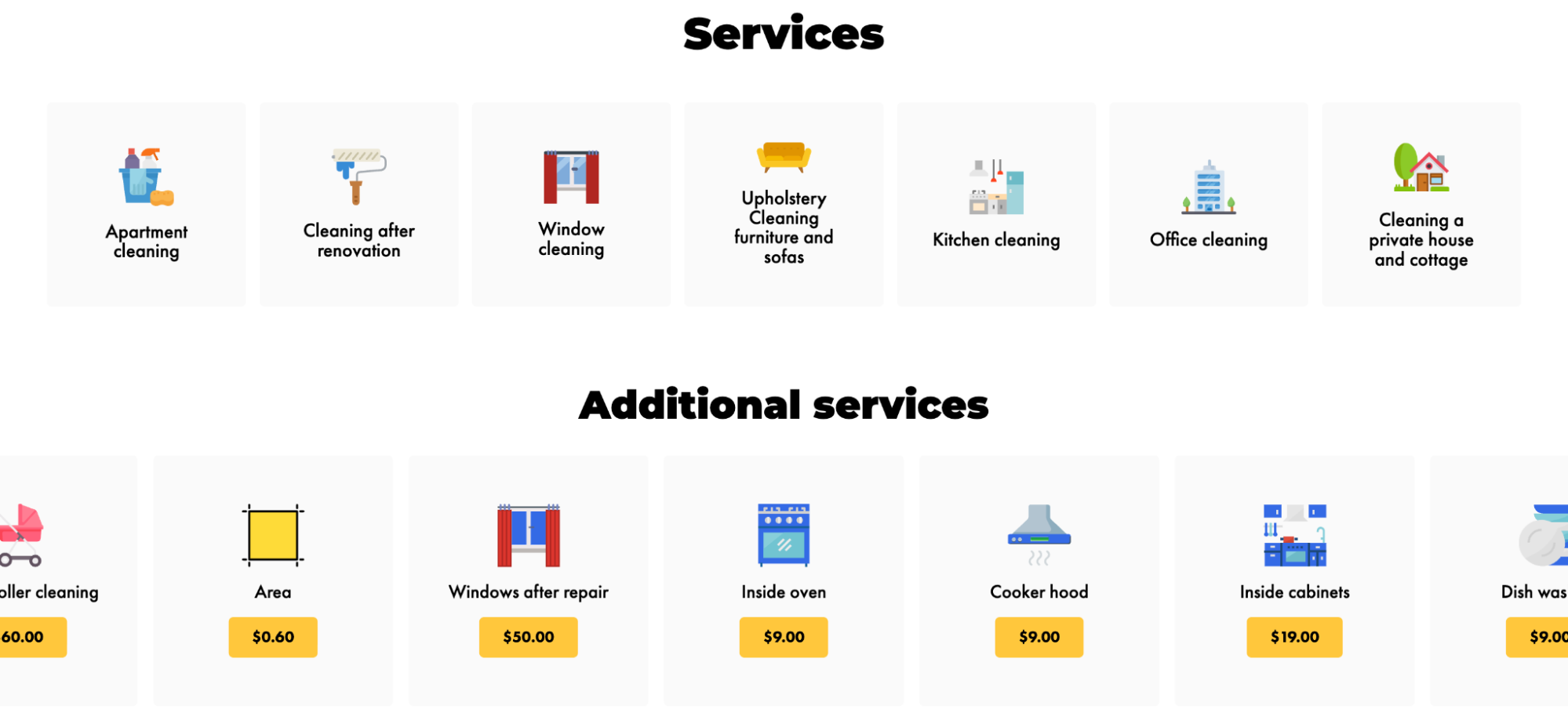
The goal is a booking website that actually converts, not one that just looks pretty.
Trust elements separate a site that converts from one that bounces. Add customer testimonials with first names and neighborhoods. Include before and after photos – they're the most persuasive visual proof of quality service you can offer. Place a booking call-to-action on every single page.
Impressions matter, and in a digital first world, your website is the first client experience people have with your business. Get it right and you'll attract more clients without spending a cent on ads. Your website is the foundation of your online business image, so treat it accordingly.
This is where SaaS analytics becomes critical. You should know exactly how many visitors turn into bookings, what each client costs you, and which campaigns are profitable. Without that visibility, you’re guessing… and guessing gets expensive fast.
2. Add instant online booking with Calendesk
Think about the last time you tried to book a service by calling a phone number and leaving a voicemail. Your potential clients don't want to call, wait on hold, or play phone tag. They want to pick a time, confirm, and move on with their day. That's the behavior pattern you need to design around!
Calendesk solves this by letting you embed real-time scheduling software directly into your website.
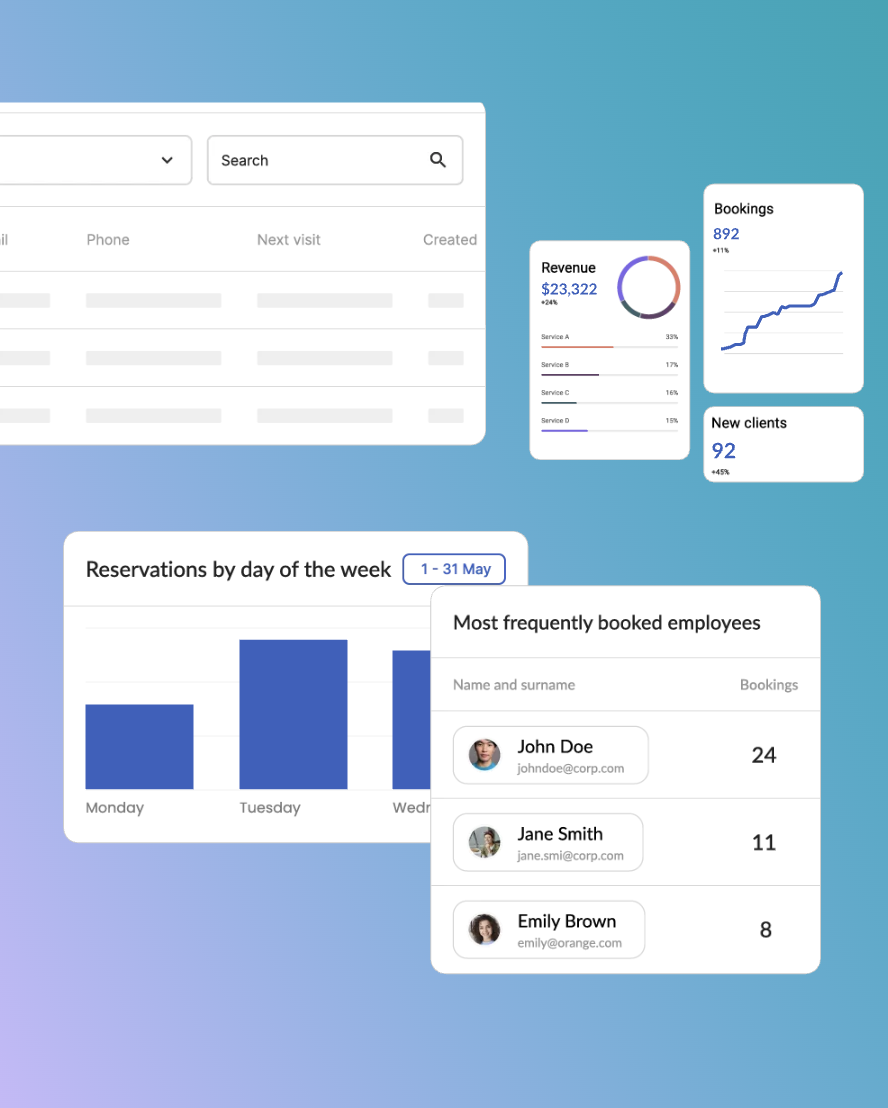
Visitors see your actual availability, pick a slot for their first cleaning, and book it – all without you lifting a finger. No back-and-forth or missed leads at 10 PM when you're off the clock. Automated confirmations and reminders handle the follow-up, which means fewer no-shows and more repeat business. If you haven't set one up yet, creating an online booking system is simpler than most people expect, especially when the scheduling tool also lets you build a website with integrated booking.
It's a conversion booster.
Your customer is comparing two cleaning companies:
One has a "call us" button.
The other lets them book in 90 seconds.
Who wins?
Every hour you operate without online booking, you're handing new clients to competitors who made the switch. For cleaning business owners serious about growth, the right online booking platform it’s now an infrastructure.
At this point, you want to make sure you can accept their payments without hiccups too, so having a recurring billing merchant account is a good idea, too.
3. Optimize your Google Business profile (local SEO engine)
When someone types "cleaning service near me" into Google search, a set of local results appears above everything else – the map pack. If you're not in that pack, you're invisible to the highest-intent buyers in your area. Your Google Business Profile is the single most important piece of local SEO you can control.
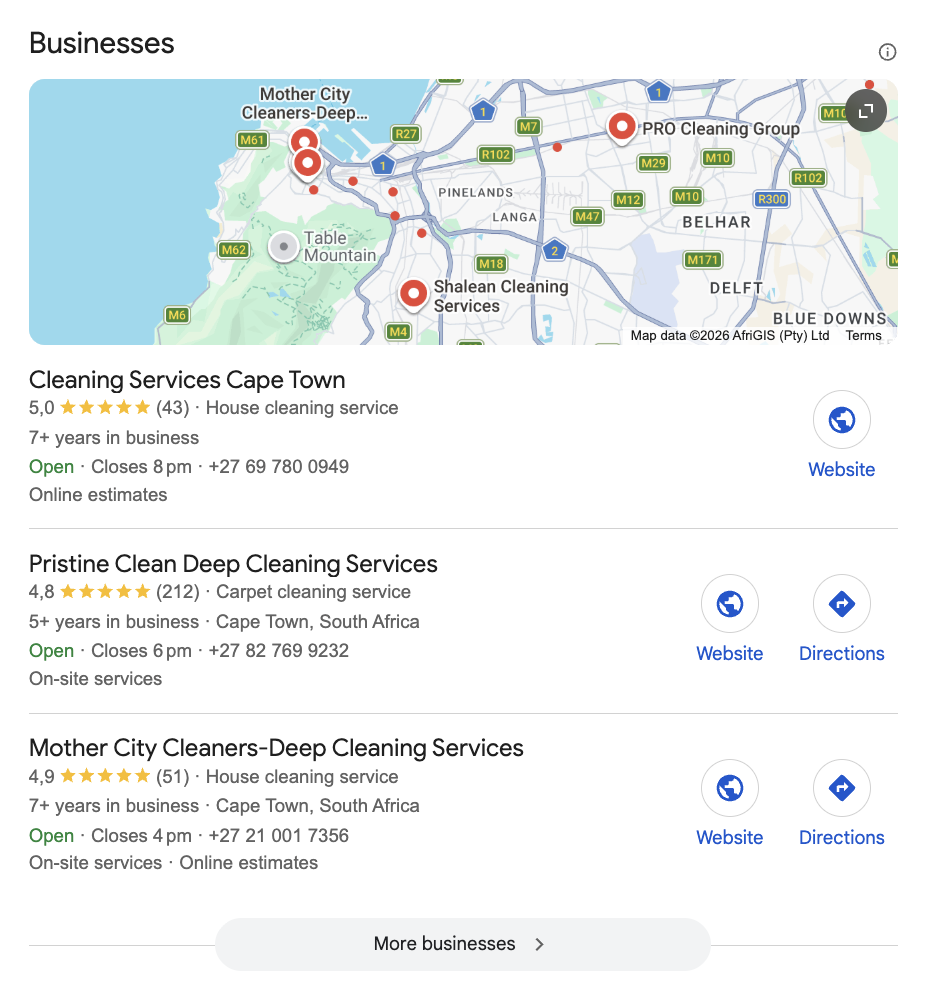
Claim it, verify it, and fill out every field. Add your business name, accurate service area, hours, and phone number. Upload real photos: your team, your equipment, your results. List every service you offer: house cleaning, deep cleaning, move-out cleaning, janitorial services. Google rewards completeness, and complete profiles show up more often in local search results and on Google Maps.
Then keep it active. Post updates. Respond to reviews (all of them, good and bad). Add seasonal promotions when relevant. Google treats active profiles as more trustworthy, and that directly impacts your ranking. If you're ignoring your Google Business Profile, you're leaving the most powerful free marketing tool for local businesses untouched.
4. Collect and leverage online reviews aggressively
Reviews aren't a vanity metric. They're the closest thing to free advertising you'll ever get. When a potential customer sees 47 five-star reviews mentioning how thorough your team is, that does more selling than any ad campaign. In the cleaning industry, where strangers enter people's homes, trust isn't built through clever marketing. It's built through other people vouching for you.
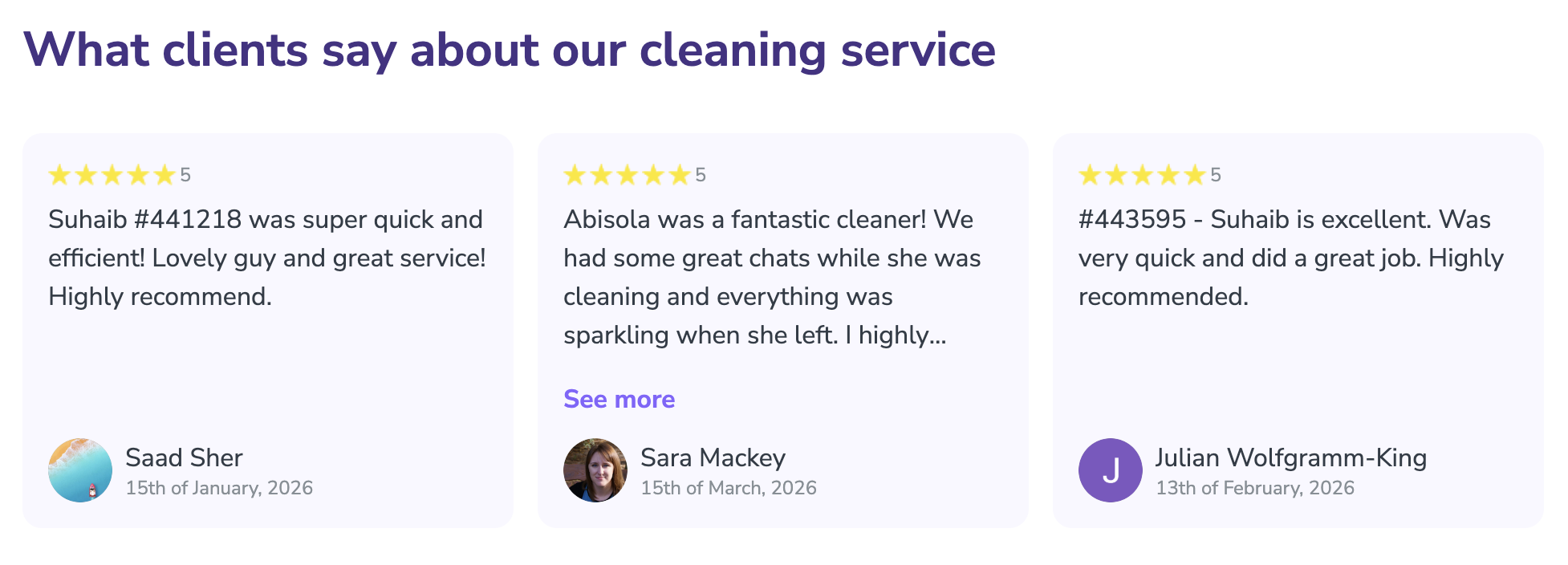
Ask for a review after every successful job. Not sometimes. Every time. Send a follow-up text or email within 24 hours with a direct link to your Google Business Profile review page. Make it effortless. Most happy customers are willing to leave positive reviews; they just need a nudge and a link.
Then leverage online reviews everywhere. Feature the best ones on your homepage. Screenshot them for social media posts. Mention your review count in your Google Ads copy. A cleaning business with 200 genuine reviews will outperform a competitor with a bigger ad budget and 12 reviews, every time. Client satisfaction, publicly displayed, turns one time jobs into a reputation that attracts ideal clients on autopilot.
A UGC platform can take things further. Instead of relying only on written reviews, you can collect and showcase real customer content. That kind of user-generated content builds trust faster because potential clients see real people, real homes, and real results.
5. Turn existing clients into referral machines
Your best clients are sitting on a goldmine for you – their network. Every happy customer knows someone who also needs a cleaner. The problem is, they won't think to mention you unless you give them a reason. That's where a referral program comes in. You can also layer in subscription-based service packages to lock in recurring revenue alongside referral growth.
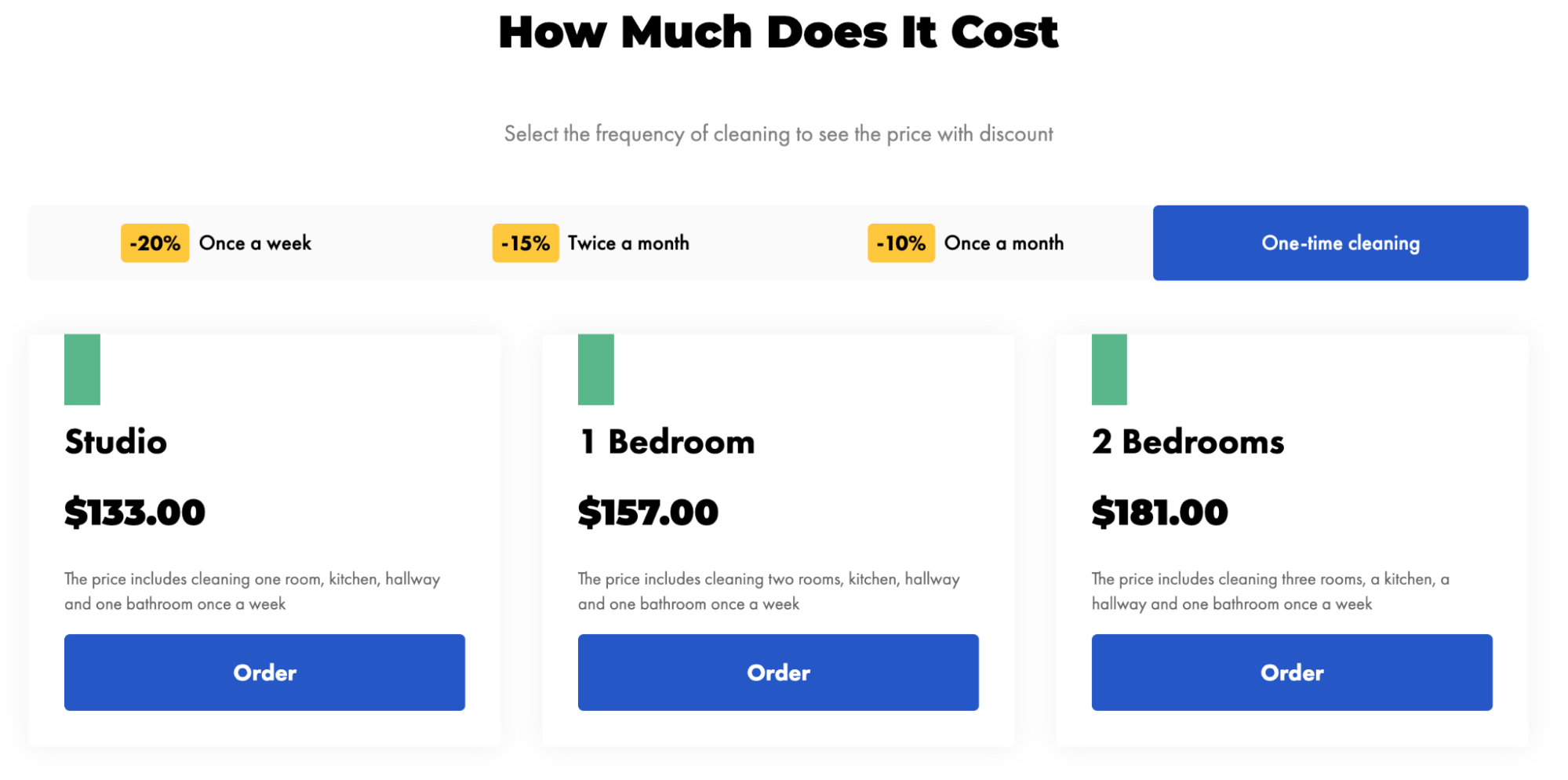
Keep it dead simple. Offer existing clients a discount on their next cleaning for every new customer they send your way. Or offer a free add on service – oven cleaning, fridge detailing, something tangible. Give them a short code, a link, or even a physical card they can hand to a friend. The easier you make it to share, the more they'll share.
Here's why this matters more than most cleaning business owners realize: referrals convert at a dramatically higher rate than any other channel. A lead from Google Ads might convert at 5–10%. A referral from a trusted friend? Often 50% or higher. Loyal customers don't just pay you; they recruit for you. Build that into your marketing strategy and watch your client base grow without increasing your ad spend.
This is where (AP) automation benefits start to multiply your growth. Instead of manually tracking who referred whom, automated systems can generate referral links, apply rewards instantly, and notify both parties without you getting involved. That means your referral program runs in the background – consistently bringing in new clients without adding extra admin work to your day.
6. Use local Facebook groups and neighborhood platforms
Every city and suburb has neighborhood Facebook groups where people ask for recommendations. "Anyone know a good cleaner?" gets posted constantly. If you're not visible in those conversations, you're missing easy wins.
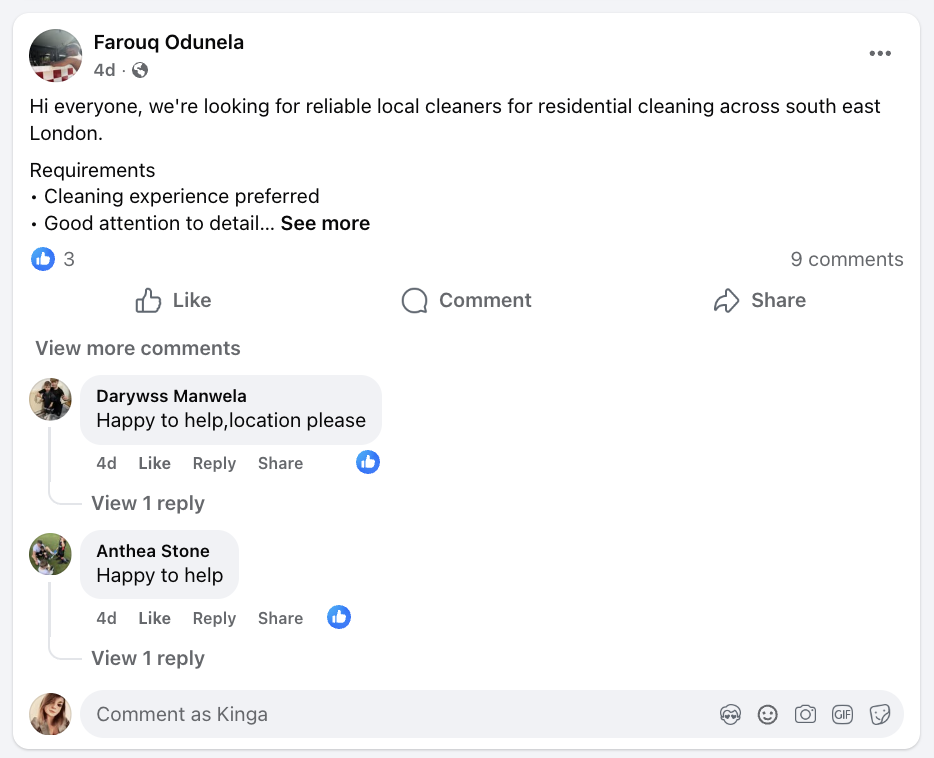
But – and this is critical – do not join these groups to spam your services. That's the fastest way to get banned. Instead, post genuinely helpful content. Share cleaning tips. Post time lapse videos of a kitchen transformation. Offer quick advice when someone asks how to tackle a specific stain and become the person people recognize as the local cleaning expert.
When someone does post asking for a cleaner recommendation, your name will come up naturally: either because you've built familiarity, or because someone else in the group tags you. Neighborhood groups and local community platforms work because they mirror word of mouth at scale. You're not advertising but become present and useful, which is exactly how cleaning companies build trust in their target market.
7. Run targeted Google Ads for high-intent leads
Google Ads is the fastest way to fill gaps in your schedule – period. When someone searches "house cleaning in [your city]" or "hire cleaners near me," they're not browsing. They're ready to book. You want to be the first result they see.
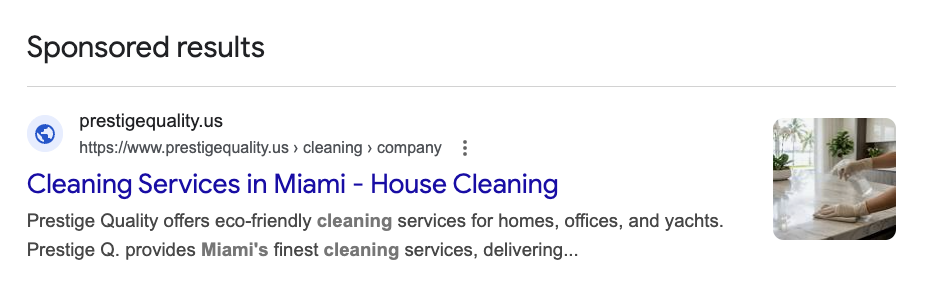
Focus your budget on location based keywords that signal buying intent. "House cleaning + city name" and "residential cleaning + neighborhood" are your bread and butter. Avoid broad terms like "cleaning tips" – those attract browsers, not buyers. Keep your ad copy tight: mention your service area, your reviews, and one clear differentiator (speed, green cleaning products, same-day availability).
Send all your ad traffic to a dedicated landing page, not your homepage. That page should do one thing: get the visitor to book.
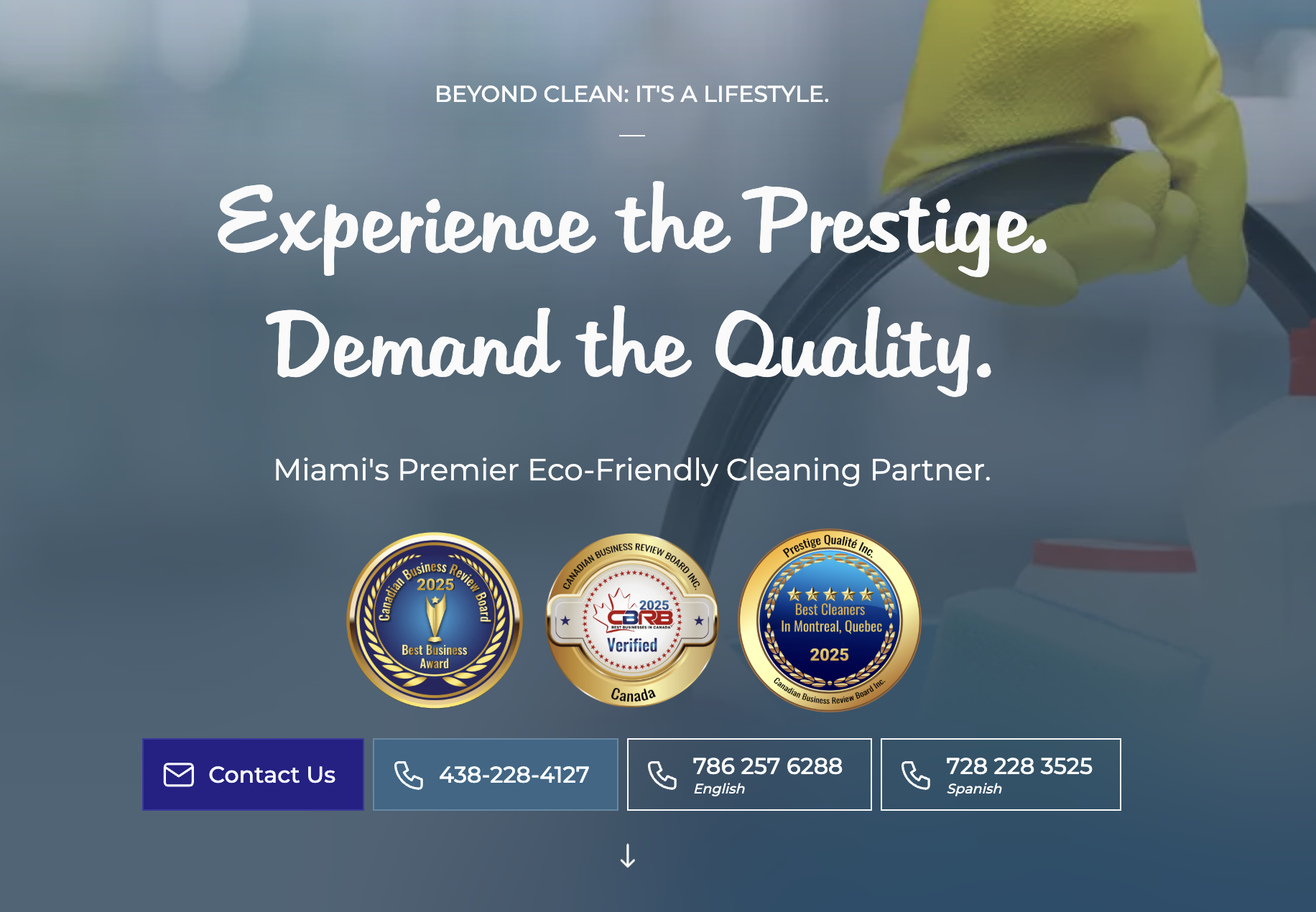
What is the site above missing? A nice booking flow.
They could embed a Calendesk booking flow directly on it!
Remove navigation menus, distracting links, anything that pulls attention from the conversion. Choosing the right booking platform for that landing page matters – the fewer clicks between ad and confirmed appointment, the higher your conversion rate. For most cleaning businesses, a well-optimized Google Ads campaign delivers new customers at a cost that pays for itself after the first or second cleaning, which you’ll see by tracking your ad performance.
On top of that, with AI data analysis layered into your campaigns, you can quickly identify which keywords bring profitable clients, not just clicks. That means less wasted budget and more bookings from people who are ready to buy.
8. Distribute flyers and target specific neighborhoods
Yes, flyers still work. No, you shouldn't blanket an entire city. Traditional marketing like flyer distribution works best when it's targeted. Pick neighborhoods where your ideal customers live, areas with the right demographics and home sizes. Drop flyers at grocery stores, laundromats, community boards, and directly in mailboxes where local regulations allow it.
Your flyer needs three things: a clear offer, a limited-time incentive, and an easy way to book. "20% off your first cleaning – book online at [URL]" with a QR code linking to your Calendesk booking page. That's it. Don't clutter it with a list of 15 services and three paragraphs of copy nobody will read.
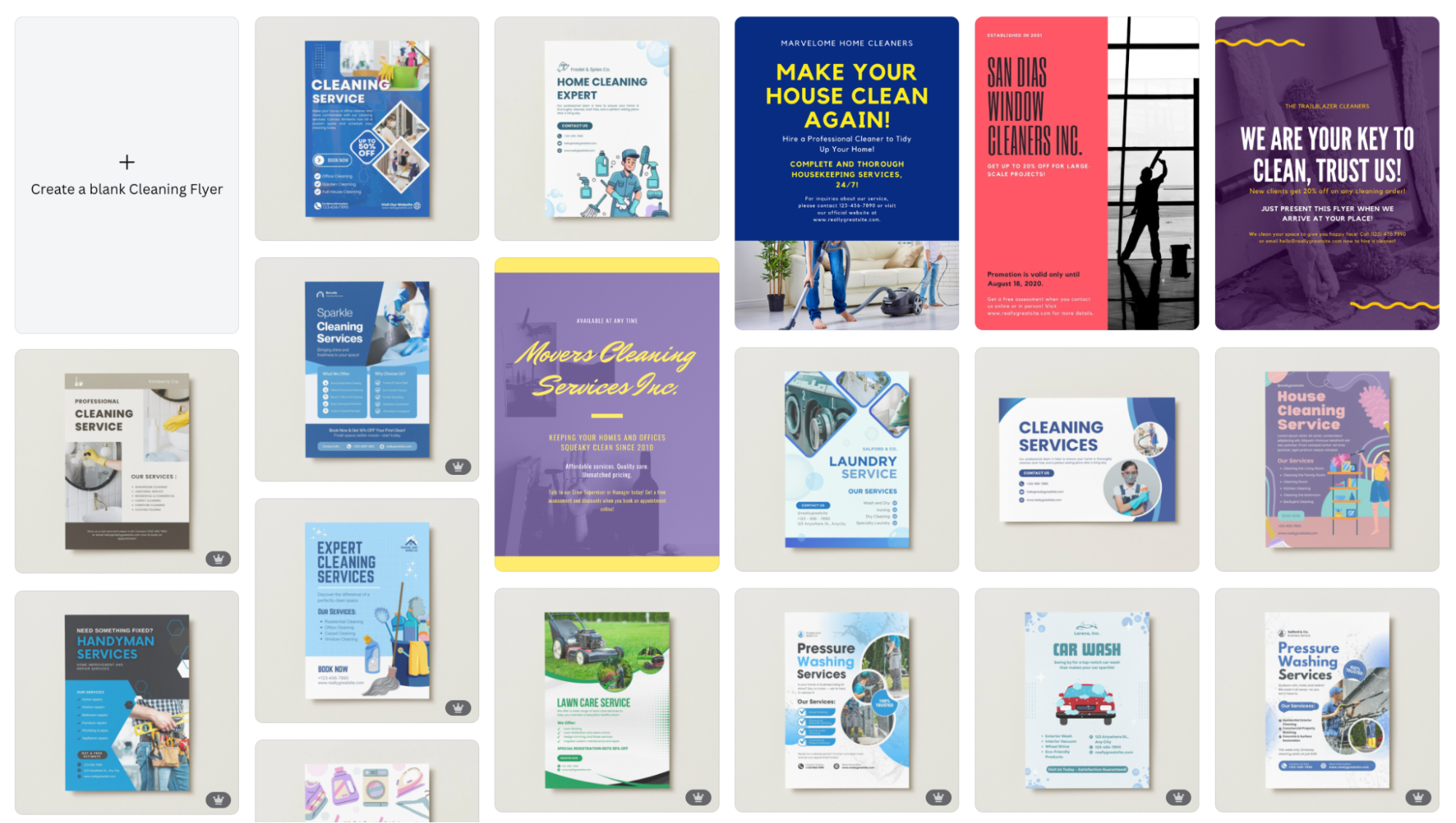
The real power move is combining offline and online. Someone picks up your flyer, scans the QR code, sees your online reviews and booking availability, and books on the spot. You've bridged the gap between a physical touchpoint and a digital conversion. The smoother that digital step feels, the better: a pleasant online booking experience is what separates a scan from a completed reservation. Stay focused, go targeted, and track which neighborhoods respond.
9. Partner with local businesses for steady referrals
Some of the best clients for a cleaning business come through partnerships, not marketing. Real estate agents need properties cleaned before showings and after closings. Airbnb hosts need turnover cleaning on tight schedules. Property managers oversee dozens or hundreds of units that need regular maintenance. These are not one-off relationships. They're recurring demand machines.
Reach out directly. Email or visit real estate agents in your service area and offer a trial cleaning at a discounted rate. Contact Airbnb hosts through local host groups. Introduce yourself at your local chamber of commerce. The pitch is simple: you make their job easier by handling the cleaning, reliably and on time. As partnership volume grows, solid scheduling strategies keep your team productive without double-booking or burning out.
What makes these partnerships so valuable is predictability. Instead of chasing individual new clients every week, a single relationship with a property manager can fill your schedule for months. These people become your best clients because they bring volume, consistency, and they rarely shop around once they trust your service quality.
10. Use social media to stay top-of-mind (not to go viral)
You do not need to go viral. You don't need dance trends or meme templates. For cleaning companies, social media serves one purpose – staying visible to people who might need you eventually. Familiarity breeds trust, and trust drives bookings.
Post simple, useful content on social media platforms where your ideal customers hang out:
Quick cleaning tips,
Short before-and-after transformations
Time lapse videos of a messy room becoming spotless
A "day in the life" clip
You're not trying to build a media empire – you simply make sure that when someone in your area decides they need a cleaner, your business name pops into their head first.
Consistency matters more than production quality. Post two or three times a week. Respond to comments. Share happy clients' feedback (with permission). Over time, this builds an online presence that supplements your Google Business Profile, your website, and your referrals. The cleaning business that's been posting helpful content for six months will always beat the one that posts once and disappears. If finding time for content feels impossible, better time management for your workday makes all the difference.
11. Build an email list and stay in touch
Most people who visit your website or interact with you once won't book immediately. That doesn't mean they're not interested – it means the timing wasn't right. An email list lets you stay in their peripheral vision until it is.
Offer something small in exchange for an email address. A cleaning checklist, a seasonal cleaning guide, or a discount on their first cleaning. Then send emails regularly – monthly works for most cleaning businesses. Share seasonal promotions, quick tips, and the occasional testimonial. Remind people you exist and that booking is easy. As your email list and booking volume grow, watch out for spam – fake bookings and spam appointments can clog your calendar if you're not prepared.
The real value of email is re-engagement. A past client who hasn't booked in three months gets a "We miss you, here's 10% off your next cleaning" email and suddenly you've recovered revenue that would've disappeared. Gift certificates for holidays. A reminder about deep cleaning before the season changes. These small touchpoints turn one-time customers into loyal customers and keep your business top-of-mind without spending a cent on ads.
Bringing it all together
There's no single tactic that fills your calendar overnight. The cleaning businesses that win long-term are the ones that combine visibility, trust, and convenience, then show up consistently.
An organic traffic strategy through local SEO and a strong Google Business Profile gets you found.
Online reviews and a referral program build the trust that converts browsers into buyers.
And a frictionless booking experience through Calendesk removes the last barrier between a potential customer and a confirmed appointment.
You don't need to implement all 11 methods tomorrow. Pick three or four that match where you are right now. If you're looking for your first clients, start with your Google Business Profile, a simple website, and Calendesk for online booking. If you already have happy customers, activate your referral program and start collecting reviews. If you've got budget, layer in Google Ads. When you're ready to level up your booking setup, understanding the essential features of a booking platform and knowing how to choose the right appointment scheduler will save you from switching tools later.
The common thread? Make it absurdly easy for people to find you, trust you, and book you. In a market where most cleaning companies rely on word of mouth alone, the business that builds a real system – even a simple one – will always come out ahead. The right appointment scheduling features paired with a well-built booking app can handle the operational side while you focus on delivering great work. Start today. Your next cleaning client is already searching.