How to become a life coach: a practical guide
 Maciej Cupiał
Becoming a life coach isn’t about chasing a fad or selling quick fixes. Over the past decade the coaching profession has grown into a multi-billion-dollar global market, with life coaching alone generating an estimated $4.6 – $5.3 billion in revenue in 2025 and thousands of coaches helping clients around the world.
People increasingly seek structured support for life transitions, confidence building, or career pivoting. A growing number of coaches now work part-time at first while building a practice that fits their lifestyle, tapping into digital delivery and flexible schedules.
This guide will walk you through what life coaching really involves, why it’s a real profession in demand, and how you can start your own practice without unrealistic promises or hype.
What you'll learn
What a life coach actually does (and what they don’t do) in real client work, so you understand the role from day one.
The real upsides and trade-offs of choosing life coaching as a career, from flexibility to financial expectations.
A step-by-step path from “I’m curious” to “I have paying clients,” with practical decisions to make at each stage.
How tools and systems help coaches grow so your business runs smoothly as it scales.
Who is a life coach?
A life coach is someone who helps people move from feeling stuck to taking structured, purposeful action toward goals they care about. At its core, coaching is a partnership focused on the present and future, not digging through someone’s past the way therapy does. Coaches work with clients to clarify what they want, identify obstacles, and create step-by-step plans to make meaningful changes in life or work.
It’s important to be clear about what a life coach is not. A coach is not a therapist treating mental health conditions, and they aren’t an expert giving direct solutions like a consultant or mentor might. Instead, a coach uses listening and accountability to help clients discover their own answers and take action.
Life coaches work across many common focus areas: from career clarity and confidence to breaking unhelpful habits and tackling big life transitions. Whether someone is rethinking a career path, building self-belief, or establishing healthier daily rhythms, coaching offers structured support tailored to that person’s goals.
Real benefits of becoming a life coach
Flexible work that adapts to life. Many coaches set their own hours, choose their clients, and work remotely, giving them autonomy over how and where they work.
Direct impact on people’s decisions and confidence. Coaching helps clients clarify goals, stay accountable, and take meaningful steps forward.
Skills that compound over time. Structuring goals, and guiding reflection make you better at almost any role or relationship.
Income that scales through packages, groups, and programs. Beyond one-on-one sessions, you can create tiered offerings and recurring revenue as your practice grows.
Emotional reward, paired with emotional responsibility. Seeing someone progress is meaningful work, but it also means holding space for real challenges and growth.
A quick reality check: coaching isn’t a shortcut to easy money or instant fulfillment. It takes patience, consistency, and real effort to build credibility and momentum in your practice.
How to become a life coach: 7 practical steps
Step 1: Get clear on why you want this
Before you hop into training or business building, understand your motivation.
Your reason for becoming a life coach will shape the kind of coach you become and how you show up for clients. Motivation matters more than niche at the start because it gives you staying power when things get tricky.
Common motivations include:
wanting a career change that feels more meaningful
moving past burnout into work with purpose
a deep desire to help others grow
If you can honestly answer at least one of the questions below with yes, you’re ready to explore coaching further:
Do I genuinely enjoy helping people reflect, set goals, and take action?
Am I open to ongoing learning about people, communication, and human behaviour?
Can I commit the time and energy to build coaching skills and a client practice?
Do I want more flexibility or autonomy in how I work?
Am I ready to show up with curiosity and patience, even when progress is slow?
Answering these will help you see where you might need clarity before moving forward.
Step 2: Learn the fundamentals
Before you start coaching real people professionally, build a solid base in the principles that make coaching work. That includes coaching frameworks (like how a session moves from goals to action), ethics, and the basics of how people think and change; all of which help you coach with confidence and integrity.
Study coaching frameworks and core skills. Learn how structured processes like questioning, goal setting, and reflection guide clients toward clarity. Many accredited programs cover this so you can facilitate meaningful progress in a coaching session.
Ground yourself in ethics and professionalism. Coaching has its own ethical standards (including boundaries, confidentiality, and respect) that protect both you and your clients. This foundation matters whether or not you pursue certification.
Get familiar with the psychology of change. You don’t need to be a mental health professional, but understanding basic human behaviour and how people make meaning helps you support clients without overstepping into therapy.
Explore types of life coaches and niches. From career coaching to health and wellness, different specialties draw on the same fundamentals but tailor the work to specific client goals.
A certification program, especially one accredited by a recognized body like the International Coaching Federation (ICF), can help you learn these fundamentals in a structured way and signal credibility to clients.
But remember: clarity and practice matter more than logos.
What clients care about most is whether you can help them think clearly and take action, not just what letters are on your certificate.
You really don’t have to spend years or get every possible certificate to start coaching. Many successful coaches begin with essential training (60–200+ hours) and keep learning as they go; building skills with real clients rather than waiting to feel “perfectly ready.”
Step 3: Practice before you feel ready
Try free sessions and beta clients. Offer a few no-charge sessions to people in your network or early prospects so you can experience real coaching conversations and get honest feedback on your approach. These trial sessions help you refine your style and see what works before you set prices or launch publicly.
Imagine this scenario: you ask a friend or acquaintance if you can coach them once a week for four weeks in exchange for feedback. In the first session, you follow your instincts and listen. In the second, you try a framework you’ve learned. By the third and fourth, you start noticing patterns in how questions open new thinking — and your client starts reporting small wins. That practice day after day builds confidence in your process even before you put a price tag on your services.
Remember: confidence comes from repetition, not credentials. The more live conversations you have, the more you learn what feels natural, what tools actually help, and how to create momentum for others — and that experience matters far more to clients than whether you feel entirely ready.
Step 4: Choose a starting niche
Picking a focused niche gives you a clearer audience to talk to, sharper marketing, and a better chance of being seen as the right coach for a particular group of people. It makes your message less generic and more relevant to the real problems people want solved.
Your first niche isn’t set in stone. Many coaches begin with a direction based on what they know or who they feel drawn to help, then refine it over time as they learn what resonates and where demand truly lies.
Here are four simple niche examples to get you thinking:
Career coaching, helping people navigate job changes, promotions, or professional confidence.
Health and wellness coaching, supporting clients with lifestyle changes, stress, or holistic well-being goals.
Mindset and confidence coaching, guiding clients to overcome limiting beliefs and build personal resilience.
Relationship coaching, helping individuals or couples improve communication, boundaries, or connection.
Even with a starting niche, you’ll likely refine, expand, or shift it as you see who you love working with, what problems you’re great at helping solve, and where the demand grows.
Step 5: Price simply and fairly
Start with packages, not hourly confusion. Instead of charging by the hour (which can range widely and leave clients unsure what they’re investing in), create simple coaching packages that combine multiple sessions plus anything extra you include. Bundles make it easier for clients to see value and for you to plan your coaching business. Packages also help you avoid inconsistent income from one-off sessions and shift the focus from time spent to results achieved. Many new coaches start with 3- or 12-session packages priced in clear ranges that reflect transformation, not just minutes.
Also, explain early pricing as a learning phase. Your first prices are part of your training program for your business. Think of them as a beta phase: you’re experimenting with what feels fair, what your ideal clients are willing to pay, and how your coaching practice flows. As you get feedback and results, you can adjust your packages and fees. This mindset lets you grow without pressure to hit a “perfect number” before you start.
In practical terms, many beginner coaches structure value-focused packages (e.g., weekly sessions plus check-ins), which helps clients commit and gives you a clearer path toward your professional goals. The key is transparency, fairness, and a willingness to refine your approach as you learn what works for both you and your clients.
Step 6: Build your tool stack
Creating systems for the everyday parts of your coaching practice means you spend more brainpower where it counts: during coaching conversations and helping clients make progress. Coaches who set up reliable processes spend less time on admin and more time deepening client work.
Essential systems to consider
Scheduling. A system that lets clients see your availability and book slots without back-and-forth emails and calendar chaos. Automated reminders help clients show up reliably.
Payments. Invoice automation software that lets you collect fees and track revenue cleanly, so you don’t have to chase payments manually.
Reminders. Automatic prompts to clients before appointments reduce no-shows and help keep momentum going.
Client notes and tracking. A central space to organize session notes and progress so you always pick up where you left off.
Communication workflows. Email outreach software to send welcome messages, prep materials, follow-ups, or check-ins.
When you automate or systemize these pieces, you stop switching between dozens of little tasks in your head. You won’t worry whether you sent the right link, forgot a payment, or missed a follow-up because the system handles it for you.
Clients notice smooth interactions. Easy booking, timely reminders, secure payment handling, and consistent follow-ups all make your work feel polished and dependable. That kind of reliability builds trust and makes clients feel seen and well cared for from the very first touch.
Step 7: Get visible in a way that feels natural
People only hire coaches they know, like, and trust, and visibility is how you make that happen. You don’t need to force yourself into a full-blown personal brand overnight. Instead, pick ways to be seen that fit your professional development style and your audience in order to increase brand awareness.
Some ways coaches build visibility that feel natural to many people
Writing. Share your insights in blog posts, articles, or newsletters that speak directly to the questions your ideal clients are asking. Teaching through writing lets you demonstrate your thinking and approach to coaching without being “on camera.”
Short videos. Small, helpful clips on topics you understand help people engage with you in a low-pressure format. These clips can be posted on social platforms or embedded in your website so prospects see your voice and style.
Referrals. Word-of-mouth still works. When you do great work for your first clients, ask them to recommend you to others or leave a short testimonial. Personal recommendations often convert faster than cold outreach.
Conversation-based visibility. Joining online communities, speaking at small events, or even casual chats in your network can lead to paying clients. Being present and helpful in places where your ideal clients spend time makes you easier to find without awkward selling.
The point isn’t to chase every shiny marketing trend. It’s to show up consistently in a handful of ways that reflect who you are and what you help people with. Authentic engagement builds trust over time, and that’s what turns attention into clients
How Calendesk can help you grow your life coach services
We’ve already talked about the kinds of tools that make a coaching practice smoother. Now let’s look at one example of how this works in practice in a way that actually supports your day-to-day work without adding technical headaches: Calendesk.
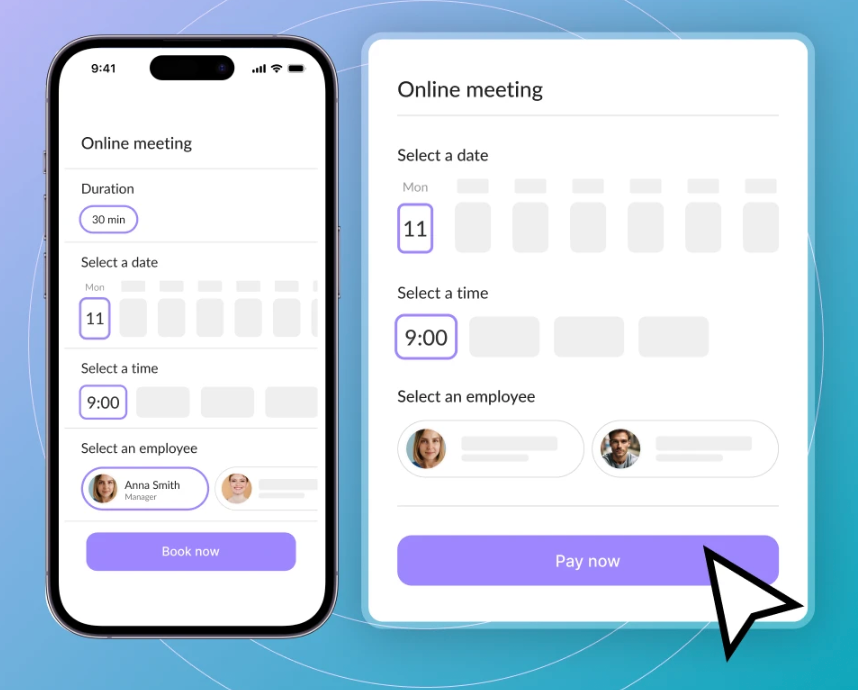
One place for bookings, payments, and session reminders
With a platform like Calendesk you can bring key parts of your practice into a single system. Clients can book sessions online at times you set, pay for packages or individual meetings, and see automated reminders.
Less admin, fewer no-shows, cleaner boundaries
Automating confirmations and reminders takes admin off your plate and sets expectations clearly. Clients get the information they need, and you’re not sending manual texts or emails before every session. That means fewer missed meetings and more predictable time blocks for focused coaching work: and that stability builds trust.
Easy setup for packages, recurring sessions, and availability
Instead of setting links and spreadsheets up, you can publish your services (like 6-session packages or weekly check-ins) with clear pricing and rules around cancellations or rescheduling. Recurring sessions become easy to manage, so clients and you have clarity about what comes next, without extra admin on your part.
A more professional client experience without technical overwhelm
For most clients, the first impression comes from the booking experience. When it’s smooth )your calendar is clear, options are easy to choose from, and payment is straightforward) that feels professional and reassuring. Tools like Calendesk help you focus on the human connection during the coaching session itself, rather than worrying about whether the booking process frustrated someone before they even showed up.
Try Calendesk today.
Over to you
You don’t need permission from anyone to start exploring this path. Plenty of successful coaches began with curiosity, simple coach training, and a willingness to grow through real conversations rather than waiting to be certified or “perfect.” What matters most is showing up and learning as you go.
You can begin small, thoughtfully and quietly. Maybe that means offering a few sessions to friends or stepping into a community conversation about personal development and professional goals. Many coaches find their footing by helping people with everyday issues first and letting their niche emerge over time.
The best coaches aren’t defined by how many badges they have, but by how much they can help: by listening deeply, guiding reflection, and holding space for progress. Confidence grows through practice, not perfection.
So here’s a question to sit with:
What’s one small way you could start helping someone move forward today, even if you don’t yet have a full school behind you or a long list of credentials?